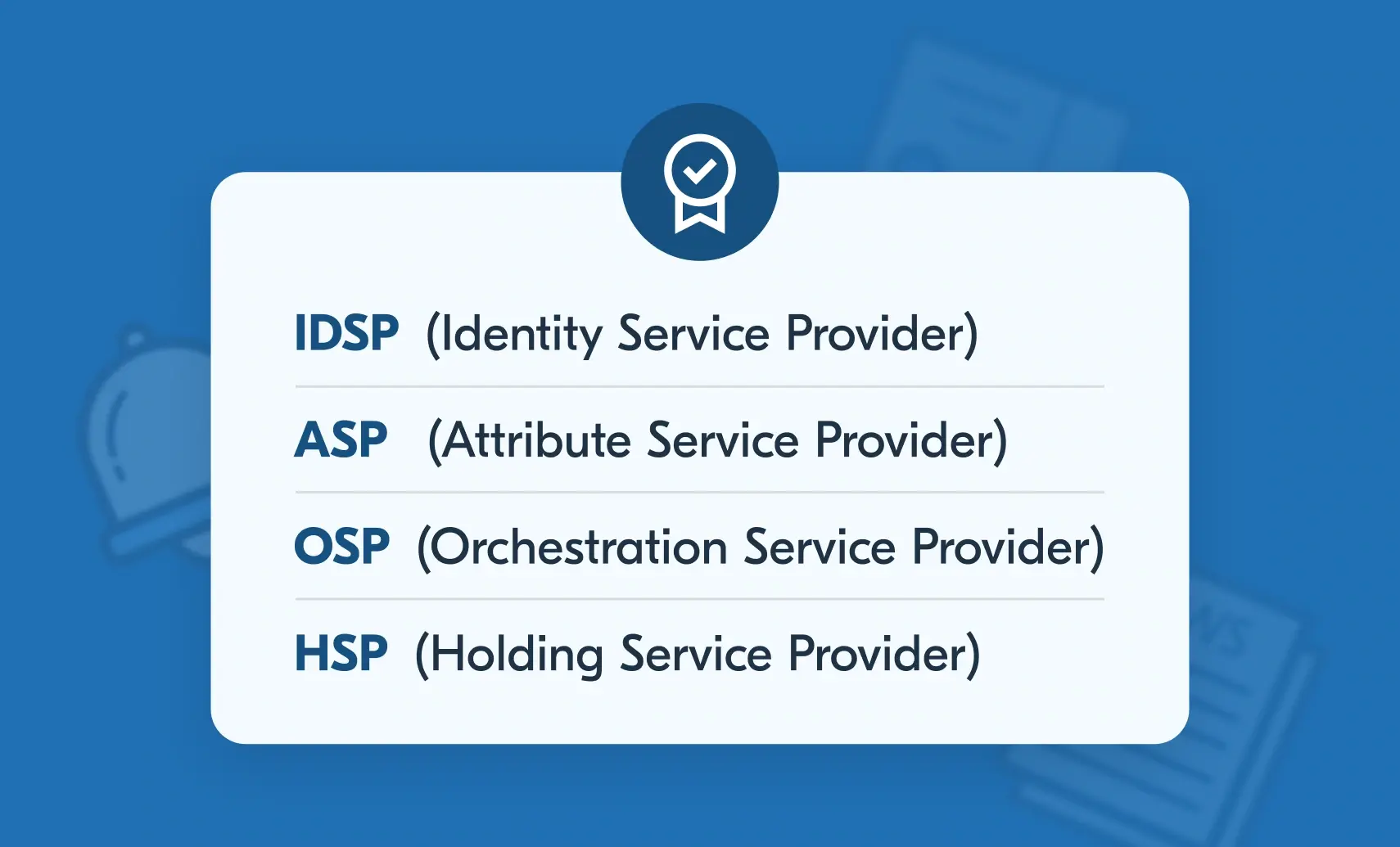

Millions of people are already using digital IDs to prove their age and identity, share their verified details with others or take more control over their personal data, all without needing a physical document.
Soon, they’ll also be able to use them as proof of age when buying alcohol in licensed premises in the UK (once the mandatory licensing conditions are updated). This includes pubs, bars, restaurants, nightclubs and supermarkets. That’s a big shift in how age-restricted sales work and it’s why having a fast, reliable and low-friction way to check IDs matters for your business.
How businesses can check digital IDs
That’s exactly why we built the Digital ID Connect ID Checker. It lets you check IDs quickly at the point of sale (keeping queues moving) whilst being confident in the check and without handling sensitive personal data.
The free ID Checker app is ready for you to download and use today. You can either download it directly to your device or use it through your web browser. For larger retailers, we’ve also built an API which can be integrated straight into self-checkouts through one simple integration.
How it works
The ID Checker is a purpose-built tool for UK retailers and hospitality teams to quickly and securely verify digital IDs certified under the UK Government’s Digital Identity and Attributes Trust Framework (UKDIATF). These are the only types of digital IDs that can be legally accepted for age checks.
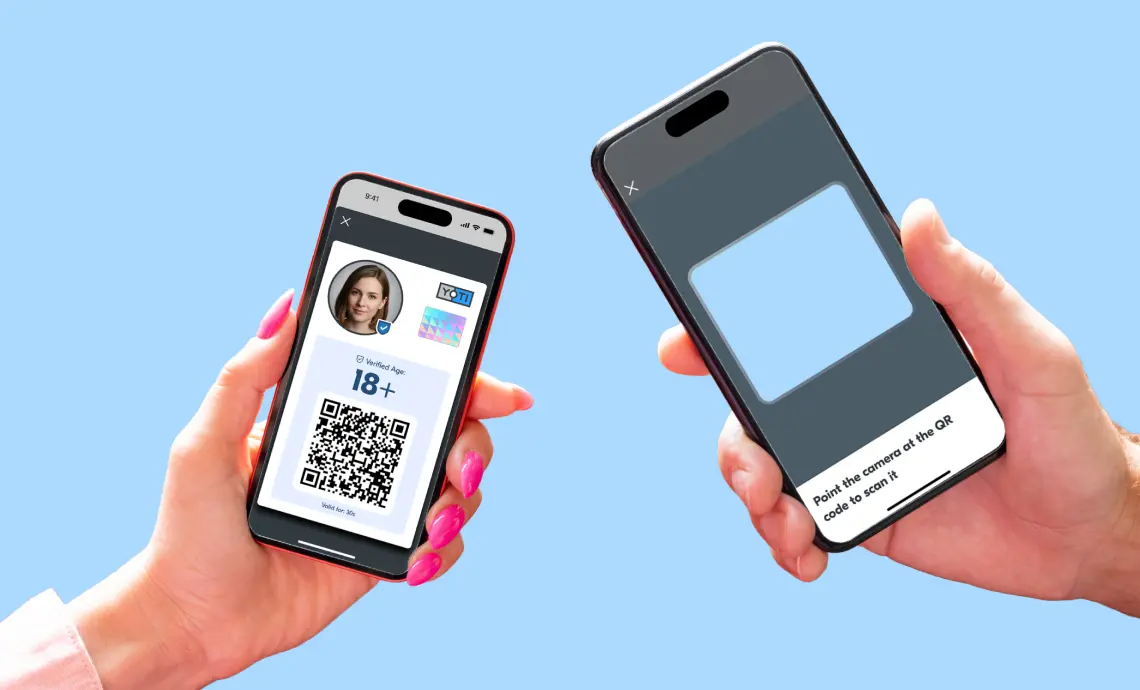
The app, which is also certified under UKDIATF, lets your staff use any smartphone or scanning device to scan a customer’s Digital ID QR code and instantly see whether:
- the digital ID is genuine and valid
- it belongs to the customer presenting it
- the customer is old enough for the purchase
- it meets the UK licensing requirements for buying alcohol
Instead of leaning over counters to inspect holograms, check expiry dates or mentally calculate someone’s age while a queue builds behind them, your staff can rely on the digital check. The ID Checker does the heavy lifting, giving a clear, certified age result your teams can trust right where it matters, whether that’s over a bar, at a checkout or at the entry point.
That matters because if your staff aren’t confident in how they check IDs, it can slow things down, creating awkward moments and eating into your customers’ experience. The ID Checker is designed to make that confidence effortless.
Designed for the real world, at busy tills and on busy nights
In busy retail settings or crowded bars, your teams don’t have time to fuss with clumsy screens or complex steps. We’ve built the ID Checker (both native and web apps and the supporting API for self checkouts) to feel as intuitive as scanning a barcode.
Using the app, you simply:
- Open the app on any smartphone.
- Scan the customer’s Digital ID QR code.
- See a clear, easy result showing their verified age result (such as ‘over 18 and suitable to buy alcohol’)
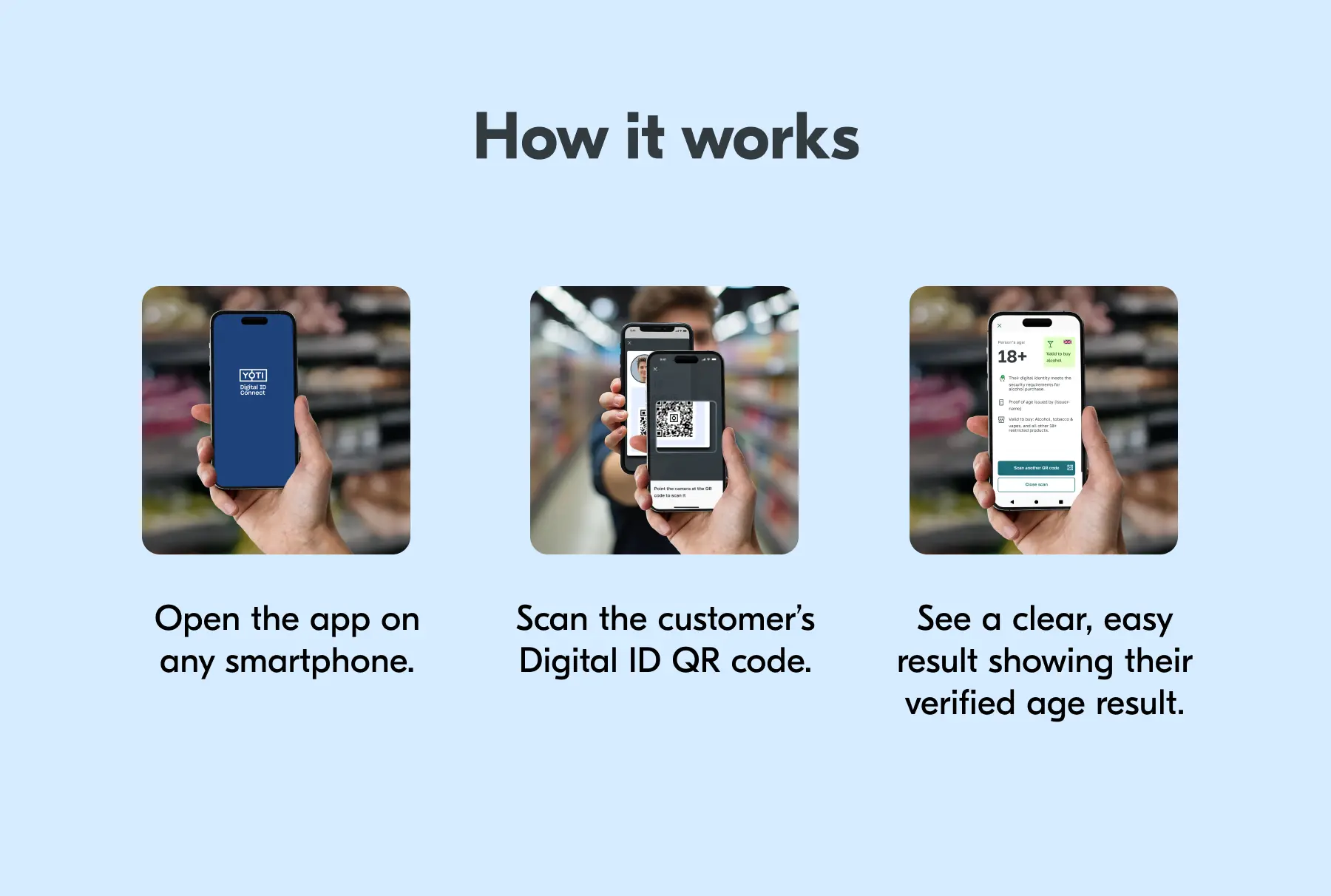
That’s all in just a few seconds. And with the API, once integrated, you can scan the user’s QR code with your existing hardware and receive the check results through your point of sale software.
Under the surface, when a customer presents their Digital ID, the cryptographic checks and secure binding have already taken place. Aided by Bluetooth (for the native app) or server-side retrieval (for the web app), the ID Checker validates that the credential is genuine and that it belongs to the person presenting it. It also displays their age threshold (like ‘18+’) and the licensing condition requirements for a digital ID.
Though these complex security checks are happening in the background, to your staff, it feels simple. That’s deliberate, because the easier it feels, the quicker a new service gets used properly.
Stronger assurance, less manual checking
Age checks with a physical ID often still come down to human comparison, with staff looking at an ID and trying to judge whether it matches someone’s face and age. We believe that puts too much responsibility in the wrong place. It’s stressful for your team and inconsistent in practice.
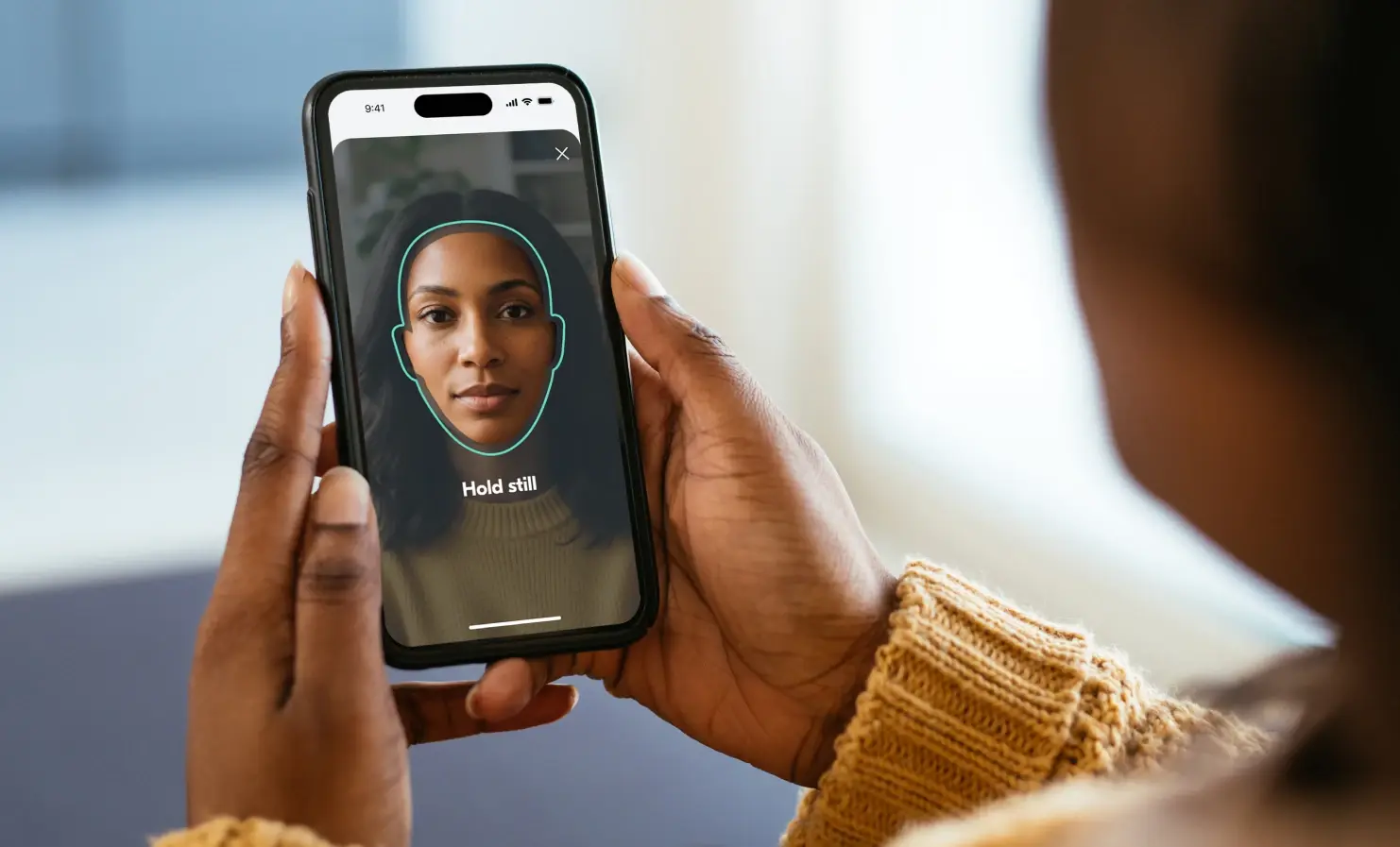
Our approach uses secure selfie binding between the person in front of you and their digital Yoti ID credential. When the ID Checker confirms that customers are verified and of age, it’s based on certified processes (and not a split-second human guess). That gives your frontline teams clarity and confidence without slowing them down.
Only the data you really need
One of the biggest concerns businesses hear about digital IDs is around data sharing. If someone’s buying a bottle of wine or a packet of cigarettes, the only thing you need to know is whether they’re old enough. You don’t need to know any other personal information (which is what’s shown when customers use physical IDs like passports or driving licences).
The ID Checker is built on data minimisation. When your staff scan a digital ID, they only receive a certified result tailored to the requirement (such as “over 18”). They do not receive a customer’s full name, date of birth or any other personal details.
If needed to meet audit and licensing requirements, organisations using our ID Checker solution can view the history of completed anonymous transactions. That’s good for customers and good for your business. You collect less personal data, reducing risk and making age checks a privacy-preserving experience. Privacy is built into how the system works.
Built for the systems you already have
We know retail and hospitality environments vary. Not every venue has perfect connectivity and not every point-of-sale system was designed for digital credentials. That’s why with the ID Checker app:
- Customers can generate their digital proof of age QR code even without an internet connection on their phone.
- We’ve built an ID Checker web app that doesn’t require Bluetooth.
- There’s also an ID Checker API for organisations that want to integrate checks within their point of sale systems or self checkouts.
Ready now, and ready for what’s next
7.5 million people in the UK have already downloaded a Yoti Digital ID and they’re looking for more places where they can use it. As digital identity adoption grows, it’s going to be more and more important for businesses to accept digital IDs. But the difference between a solution that technically works and one that truly works at scale comes down to crucial points:
- Does it minimise unnecessary data exposure?
- Does it integrate with your existing systems?
- Does it make life easier for your staff and your customers?
- Does it make the interaction faster than checking a physical ID?
- Can your customers use their Digital IDs in low-connectivity environments?
Our ID Checker answers all of those questions, by removing complexity rather than adding it. It’s a tool your teams can rely on day in, day out.
And importantly, it’s available now, so you can start using it ahead of upcoming legislative changes that will let people use digital IDs to buy alcohol in licensed premises. That shift is expected in the coming months.
Simple on the surface, sophisticated underneath
If the checking experience is slow or intrusive, people will hesitate to use it. But if it’s slick, privacy-preserving and reliable, adoption becomes natural. The ID Checker plays a critical role in that transition. When that bridge between a customer’s digital ID and your need for age assurance is fast and secure, customers share less, staff do less, queues move faster and trust grows stronger.
Download the ID Checker app for free on iOS or Android today, and see just how simple it is to accept digital IDs with confidence. Or, get in touch to see how to integrate our API solutions into your existing in-store systems.
– Amba, PR & Communications Exec