

Yoti’s latest MyFace model re-certified with a perfect score for NIST Level 1 and Level 2 liveness detection

profile picture Matt Prendergast 2 min read
Man working at laptop in office setting

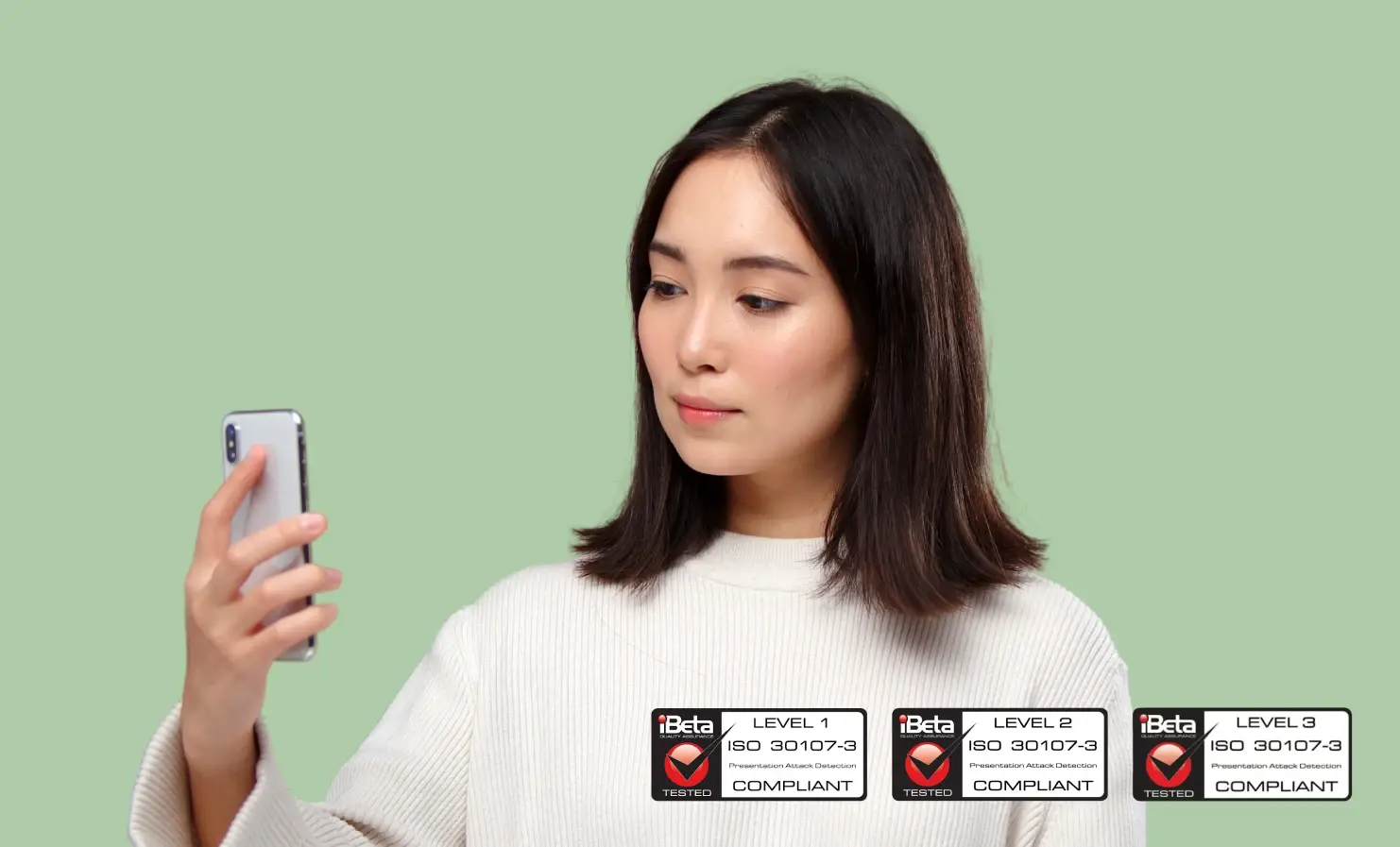
We are delighted to announce the results of the most recent testing of our latest liveness technology, MyFace. Working with iBeta, a NIST certified testing lab, Yoti’s latest liveness detection model was tested to be compliant with ISO/IEC 30107-3 standards. For both NIST level 1 and level 2, Yoti MyFace achieved:

  • 100% detection of attack (0% false positives)
  • 100% approval for genuine presentations (0% false negatives)

NIST provides a framework for testing performance levels of liveness detection. Yoti’s passive liveness technology does not require any action from the user and works from a single selfie. Users do not need to perform any further movements, facial expressions, nor repeat any prompts. This greatly improves success rates and accessibility.

NIST Level 1 uses objects that could be found in a regular home or office. Materials used for testing should be limited to a cost of $30, and masks are excluded. To pass NIST Level 1, you must detect every attack and limit false negatives to less than 15%.

NIST Level 2 involves testing with more specialist attacks, such as latex facemasks or 3D printers. Materials used for testing should not cost more than $300. To pass NIST Level 2, you must detect 99% of attacks and limit false negatives to less than 15%.

It can be confusing for businesses when they read articles or posts saying liveness systems are easy to beat. Independent testing by respected testing agency iBeta ensures businesses and regulators can be confident in the quality of Yoti’s MyFace Liveness.

You can view the confirmation letter of Yoti’s certification from iBeta here.

To learn more, get in touch.
Keep reading

An image of the ID Checker app being used in the real world to scan a customer's digital ID.

Meet the free ID Checker app

In the UK, the way people are able to prove their age is changing. The Government is actively working to update legislation that’ll allow digital IDs to be used as proof of age when buying alcohol. It’s a significant step towards modernising everyday, in-store interactions for retailers and hospitality venues across the country. To help businesses prepare for these changes with confidence, we’re launching the Digital ID Connect ID Checker app. It’s a free, simple and secure way for staff to verify customers’ digital IDs when they choose to use them to prove their age or identity in person.

7 min read
An celebratory image which says "1 billion age checks completed". Underneath the text are images representing the different types of age checks that Yoti offers such as facial age estimation, Digital IDs and identity document checks.

Yoti completes 1 billion age checks - and counting!

We’re celebrating a huge moment in our journey: Yoti has now completed over 1 billion age checks! When we started out, we had a simple but powerful ambition: to help people prove their age without revealing their full identity. We recognised early on that not everyone has access to a document or always feels comfortable using it. That’s why we innovated and developed facial age estimation. Reaching this milestone – across facial age estimation, Digital IDs, identity document checks and our other secure age-checking methods – shows that our technology is being used safely and responsibly around the

4 min read
An image of a laptop screen displaying a Yoti Verified Call. Icons surrounding the main screen show the verified identities of each attendee.

Introducing Yoti Verified Calls

Yoti Verified Calls is a new innovative service, designed to combat identity fraud and cyber attacks, while building trust during video calls. It enables businesses and individuals to verify the identity of attendees before or during video calls, reducing the risk of impersonation, deepfakes and unauthorised access.   The rising threat of deepfakes Barely a week goes by without a headline about deepfakes. Whether it’s a celebrity finding fake images of them circulating online, political leaders appearing in a deepfake video, or a member of the public scammed, the technology behind deepfakes is growing more accessible, believable, sophisticated and

4 min read