

Every month, 2.3 million minors in France access adult content online. In response, the French regulator Arcom has introduced strict new rules to ensure that only adults can access platforms with pornographic content. These measures, which come into full force on 11th April, aim to protect children while protecting the privacy of adults.
In this blog, we answer some of the common questions about the new law and explore how our solutions can help platforms to comply.
What are the new rules from Arcom?
In October 2024, Arcom, (Audiovisual and Digital Communication Regulatory Authority), announced new rules for adult operators and platforms with pornographic content. They must not show any content to a user until their age has been verified. These rules came into effect on 11th January 2025, with platforms given a transition period to implement suitable age verification solutions.
That transitional period ends on 11th April. From this date, adult content sites must:
- No longer use temporary methods like bank card verification.
- Only use age checks that are effective, privacy-preserving and data minimising.
- Offer users at least one ‘double blind approach’.
- Use an age verification provider that is legally and technically independent of any online platform hosting or providing porn content.
What are the penalties for non-compliance?
In the event of non-compliance, Arcom may formally notify the service to comply. If the failure continues, the regulator may impose a financial penalty which could be up to 4% of the website’s global annual revenue. Arcom also now has the power to require Internet Service Providers (ISPs) to block access to a non-compliant website nationwide.
How does Yoti’s technology help businesses comply with Arcom’s new age verification rules?
We have a number of highly effective and privacy-preserving age solutions platforms can offer their users:
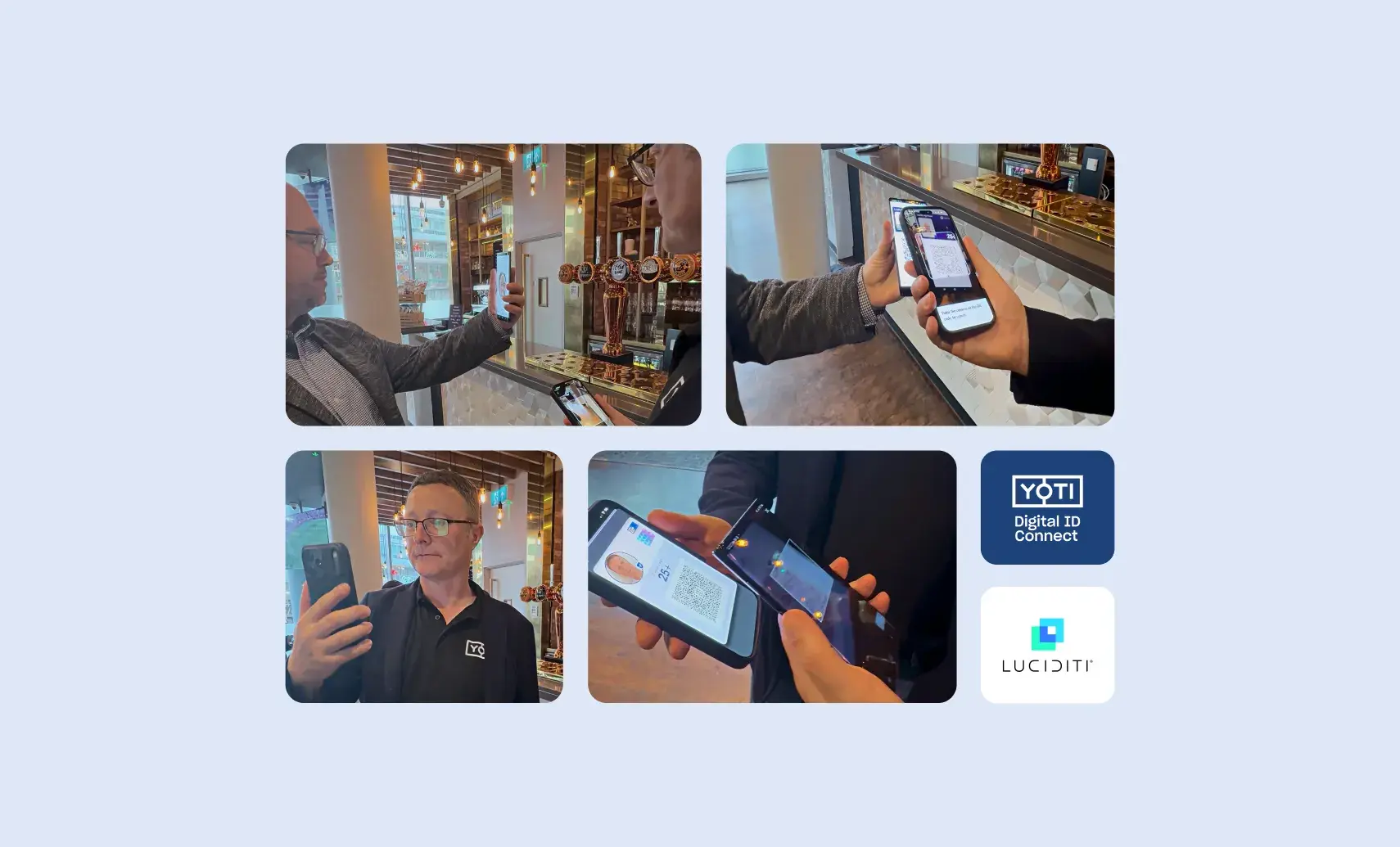
- Digital ID app, that lets users anonymously share an ‘over 18’ proof of age credential.
- Identity document, which is checked for its authenticity and to confirm it belongs to the rightful owner. Liveness technology confirms it’s a real person completing the check.
- Facial age estimation, used with a suitable age threshold to ensure no underage access. Used in conjunction with our anti-spoofing tools to protect against spoofing attempts.
- Age tokens, that allow users to share their age across different websites without completing a new age check every time.
What is a double blind or double anonymity solution?
‘Double blind’, or ‘double anonymity’, means the adult platform should not know who is being age verified, and the age verification provider should not know which platform an age verified person is accessing. This means the platform only receives confirmation that the user is of legal age, and the age verification provider does not know which platform the user is visiting.
Yoti can support platforms with a double blind solution, helping them to comply with the law.
Will children be able to get around the age checks?
To comply with the law, platforms with pornographic content must make efforts to limit the possibilities of circumvention of the technical solutions they implement. This means each method must be robust and have anti-spoofing measures in place.
For example, liveness technology prevents people from using a photo, video or mask. This can be used with facial age estimation to be certain that the age of the user is the one that is estimated.
How can platforms protect user privacy whilst complying with the age verification requirements?
Privacy is a key focus of the law. Any age verification solution must protect privacy and include the principles of data minimisation. This means only the necessary, or minimum, data should be used in the verification process. So if a platform only needs to know that a user is 18+, that should be the only information shared.
All of our solutions mentioned above are built with the highest privacy standards. For instance, with our Digital ID app, users only share a verified ‘over 18’ credential and nothing else. Our Digital ID allows a user to create a verified ‘over 18’ without linking their identity or credential to any website or platform. The credential can be only shared with the user’s consent provided on their mobile device.
With facial age estimation, users do not need to use an identity document. This makes it an inclusive method for those who either do not own documents or don’t feel comfortable using them online. Users simply look into the camera on their device, their age is estimated and their image is then instantly deleted. They remain anonymous the whole time; facial age estimation technology does not identify them.
What do the age checks mean for users?
The fundamental aim of the law is to protect children from inappropriate content online. At the same time, the age checks will be secure and privacy-preserving, protecting the privacy and personal information of adult users.
Users should have at minimum two options to choose from, allowing them to select the verification method they feel the most comfortable with. Many age verification methods are also designed to be quick and easy to use. Facial age estimation takes around one second and age tokens help users to seamlessly access different websites, without proving their age from scratch every time.
The new rules are about protecting children and protecting the privacy of adults who can legally access the content. It is not a trade off.
How does this regulation compare to age verification laws in other countries?
France has become one of the first major economies to actively enforce age assurance measures for viewers of adult content. In October 2024, the French courts system ordered internet service providers to block access to a number of non-compliant pornographic websites that had failed to implement any type of age verification system. Sites will have to use privacy-preserving age checks or risk getting blocked by French ISPs.
Get in touch if your business needs privacy-preserving age checks.